


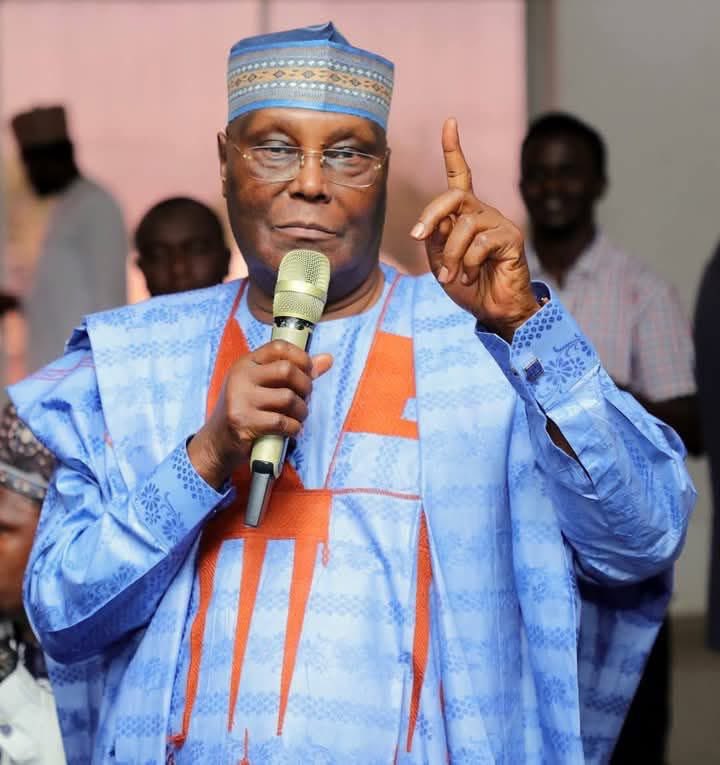
Former Vice-President Atiku Abubakar has sharply criticised President Bola Tinubu’s administration, accusing it of ushering in renewed hardship for Nigerian workers instead of the renewed hope it promised during the 2023 elections.
In his Workers’ Day message released on May 1, 2026, Atiku lamented that three years into Tinubu’s tenure, the fortunes of ordinary Nigerians have not improved. Still, rather, the pockets of those in power have been replenished. He portrayed workers as the primary victims of policies prioritising government revenue over citizens’ welfare.
Atiku reflected on the fuel subsidy removal, a policy he himself had long supported as essential to curb a fiscal haemorrhage that benefited shadowy cabals while starving development funds. Yet, he described its implementation as reckless and callous, noting that President Tinubu announced the end of subsidies on inauguration day without any prior preparation, safety nets, or transition plans for the public. This abrupt move caused fuel prices to surge dramatically, with transportation costs doubling or tripling overnight, and the prices of food and basic goods skyrocketing in tandem.
“For the average Nigerian worker, already grappling with salaries diminished by years of inflation, this policy shift transformed everyday survival into an unaffordable luxury,” Atiku argued.
He questioned the fate of the trillions of naira saved from subsidy removal, asserting that instead of funding healthcare, education, infrastructure, or economic stimulus for the people, these resources have been redistributed among government tiers. Disturbingly, a significant portion appears to finance the controversial $11 billion Lagos-Calabar Coastal Highway, awarded without competitive bidding to a firm owned by Tinubu’s acknowledged business partner—a move Atiku branded as brazen public fund diversion for private gain.
According to him, while workers now pay more for commutes, meals, and their children’s schooling, the administration greenlights mega-projects that lack transparency, underscoring a governance model that burdens the masses to enrich the elite.
Compounding this woe is the administration’s decision to float the naira’s exchange rate, which triggered a historic free fall without accompanying strategies to stabilise the currency or attract foreign inflows. The result has been a devastating erosion of purchasing power, rendering imported essentials—from medicines to food and educational materials—prohibitively expensive or simply unavailable from shelves.
Businesses dependent on imports have shuttered or scaled back, sparking widespread job losses and leaving long-time employees unable to sustain their families, the former vice-president detailed. Atiku further decried the tax reforms as an assault on the impoverished, extracting more revenue from a populace already stretched thin during an economic crisis. True fiscal responsibility, he contended, lies in fostering economic growth to naturally broaden the tax base through job creation and rising incomes, not in heightening the squeeze on the vulnerable.
Amid these revenue boosts from subsidy savings, exchange rate gains on dollar revenues, and aggressive taxation, government borrowing has ballooned dramatically, Atiku noted, with Nigeria’s debt profile deteriorating sharply.
For two straight years, budgets have remained underfunded, yet there’s scant evidence of enhanced infrastructure, public services, or poverty alleviation—only deepening multidimensional poverty. Nigerians deserve a transparent accounting of these funds, he demanded, calling the opacity an affront to taxpayers and future generations saddled with the debt.
rather. AtikuerAtiku juxtaposed this reality with his own 2023 campaign vision: a $10 billion economic stimulus, drawing from subsidy savings to generate millions of jobs in agriculture, manufacturing, technology, and infrastructure, while aiding the vulnerable. Such a people-focused plan would have turned reform pains temporary, sparking genuine renewal through productivity and organic revenue growth, rather than impoverishing extraction.
In contrast, Tinubu’s path favours opaque ventures for the well-connected, he charged.
Urging workers to view their plight not as mere statistics but as fallout from trial-and-error leadership, Atiku insisted they did not vote for impoverishment but for hope that was snatched away. Nigeria possesses the resources and talent needed for betterment, he affirmed, but lacks the political will to govern for all rather than the few—prioritising living standards over debt expansion and patronage networks. On this Workers’ Day, he called for leadership that truly measures success by the people’s welfare.







Leave a Reply