



The Nigeria Correctional Service (NCoS) has revealed that awaiting-trial inmates constitute 64 percent of the country’s custodial population, highlighting persistent congestion across correctional facilities nationwide.
Controller General of NCoS, Sylvester Nwakuche, disclosed this while presenting the agency’s 2025 budget performance and 2026 estimates before the House of Representatives Committee on Reformatory Institutions in Abuja on Wednesday.
Nwakuche stated that as of February 9, 2026, Nigeria’s total inmate population stood at 80,812, comprising 51,955 awaiting-trial inmates, 24,913 convicted inmates and 3,850 detainees under other categories.
He described the service as a key institution in the criminal justice system responsible for the safe custody, rehabilitation and reintegration of offenders.
Reviewing the 2025 budget performance, the Controller-General said the Service received a total appropriation of ₦184.63 billion covering personnel, overhead and capital expenditure.
Out of the ₦124.31 billion approved for personnel costs, ₦112.68 billion, representing 90.6 per cent, was released and fully utilised for salaries, pensions and health insurance contributions under the Integrated Payroll and Personnel Information System.
He added that recurrent overhead releases stood at 73.7 per cent, with ₦27.28 billion, representing 71.7 per cent of funds received, spent on inmate feeding nationwide.
However, outstanding obligations for food rations stood at ₦10.75 billion, while ₦6.49 billion was spent on operational costs, including staff training, fuelling of operational vehicles, electricity, security services and facility maintenance.
Nwakuche expressed concern over low capital funding performance, noting that only ₦3.22 billion, representing 22.2 per cent of the ₦14.50 billion capital budget, was released and utilised, leaving ₦11.27 billion in unreleased funds for critical projects such as custodial centre construction, security equipment procurement and ICT upgrades.
Despite not being a revenue-generating agency, the Controller-General disclosed that the Service realised ₦84.65 million as internally generated revenue in 2025 and currently operates with a staff strength of 33,024 personnel deployed across the country.
Presenting the 2026 budget proposal, Nwakuche sought ₦198.85 billion to cover personnel costs, recurrent overhead, inmate feeding, operational expenses and capital expenditure for custodial and non-custodial operations nationwide.
He said ₦138.30 billion was proposed for personnel costs, while ₦50.40 billion was earmarked for recurrent overhead, including ₦14.83 billion for feeding an estimated inmate population of 91,100 at ₦1,125 per inmate daily.
He further appealed for an additional ₦90.38 billion to boost capital funding and requested ₦37.99 billion to support non-custodial measures across the 774 local government areas.
Nwakuche also sought legislative approval to clear outstanding liabilities, including ₦30.38 billion in promotion arrears and ₦25.16 billion owed to contractors.
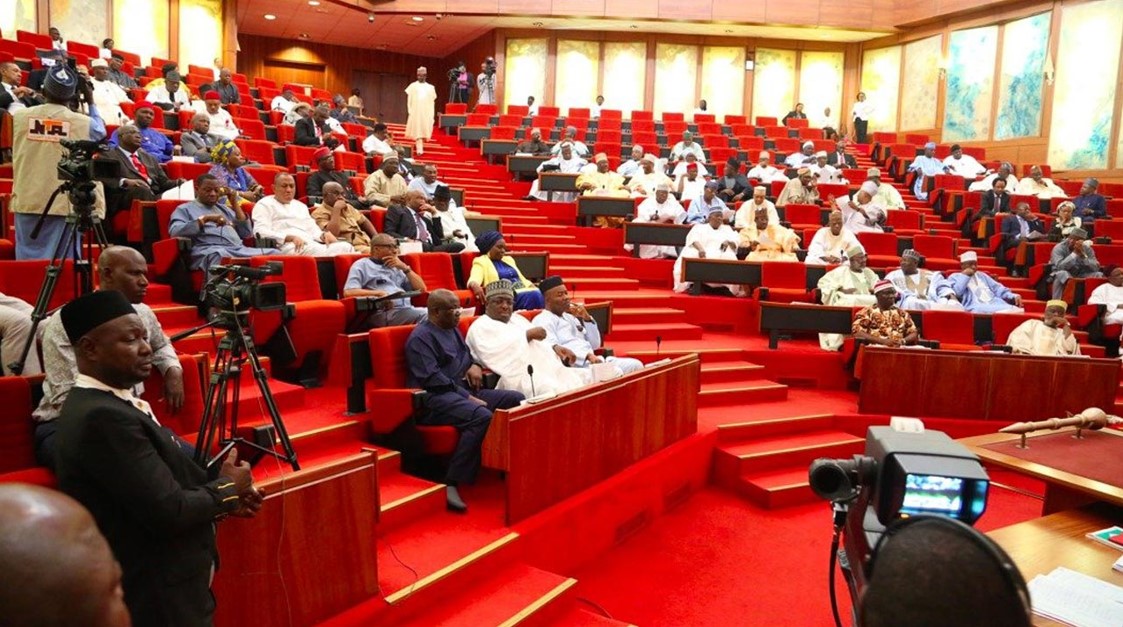
Chairman of the House Committee on Reformatory Institutions, Hon. Chinedu Ogah, called for urgent reforms in Nigeria’s correctional system, including improved funding, modern infrastructure and presidential assent to the Correctional Service Trust Fund Bill, noting that many facilities built over a century ago have deteriorated and require urgent attention.







Leave a Reply