


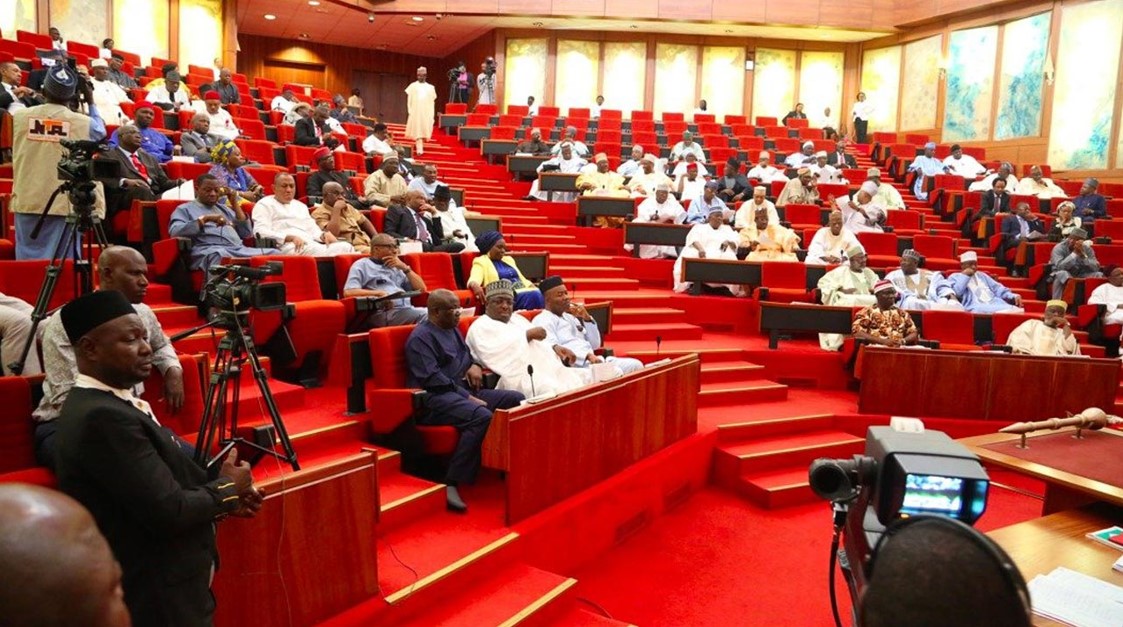
The Electoral Act, 2022 (Repeal and Re-Enactment) Bill 2026 was passed by the Senate on Tuesday, following a contentious session in which lawmakers sharply disagreed. Senator Enyinnaya Abaribe’s call for division on Clause 60 sparked protests and objections from a number of senators, intensifying the debate.
Opposition members immediately disputed Senate President Godswill Akpabio’s initial claim that the request had been withdrawn. Senate President Godswill Akpabio initially said the request had been withdrawn, a position that was immediately contested by opposition members.
When Deputy Senate President Barau Jibrin invoked Order 52(6) to argue that it was improper to reopen an issue that had already been decided, tensions increased.
This caused more commotion in the room, which included a brief altercation between Abaribe and Senator Sunday Karimi. Later, Senate Leader Opeyemi Bamidele stepped in, emphasising that his rescission motion had overturned previous rulings and supported Abaribe’s request.
After the discussion, Abaribe formally requested a division on Clause 60(3) in his motion under Order 72(1). He wanted the clause that permits manual transmission of election results if electronic transmission is unsuccessful to be removed.
Senators were asked to indicate their positions by standing during the voting process. At the end of the count, 15 senators voted against keeping the proviso in place, while 55 senators were in favour.
Legislators agreed to revoke the previous amendment earlier in the day, which caused the bill’s clause-by-clause consideration to be delayed.
The Senate was able to meet again as a Committee of the Whole for new discussions thanks to this action. Clause 60 caused the debate to stall once more as Akpabio read out the clauses, prompting consultations, muttering throughout the chamber, and ultimately a closed-door session.
Concerns about the Independent National Electoral Commission’s 2027 election schedule were a factor in the decision to re-examine the bill. The suggested election dates, according to Bamidele, might not comply with legal requirements and might coincide with Ramadan, which could have an impact on logistics and voter turnout. Lawmakers also pointed out technical flaws in a number of clauses, such as problems with cross-referencing and numbering. Before the bill was ultimately approved, these issues were resolved.






Leave a Reply