


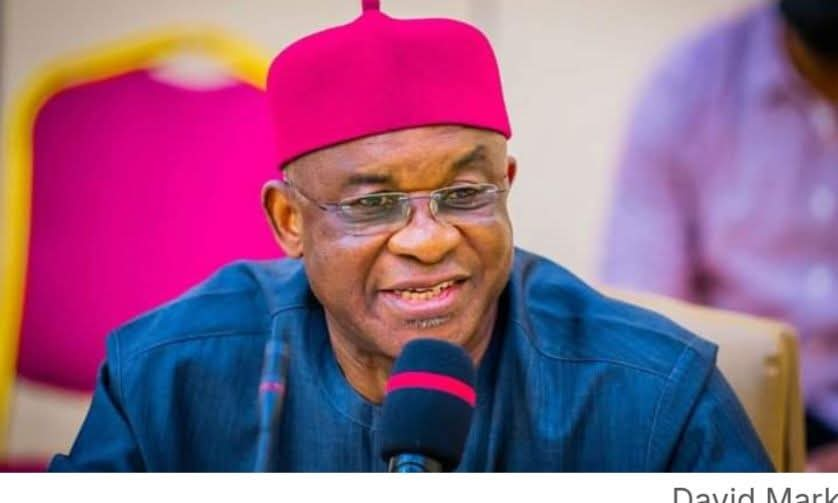
The recent decision by the Independent National Electoral Commission (INEC) to cease recognition of the National Working Committee (NWC) of the African Democratic Congress (ADC) led by David Mark has sparked fresh debate about the state of Nigeria’s democracy and the role of opposition parties.
The development has generated mixed reactions across political circles and on social media. One such reaction came from a commentator, Jato Jesse, who criticised opposition alignments, stating:
“You can’t be a right-thinking Nigerian and support thieves who, because they are not in power, want to get there by reuniting. It is not about removing Tinubu alone… are those who want to be there not part of the problem?”
However, in response, political figure and analyst Hon. Dr Aondoaseer Gbe Benjamin Orduen offered a broader perspective, arguing that the issue extends beyond personalities or party affiliations.
According to him, the central concern should be the health of Nigeria’s democratic system rather than individual political actors.
He noted that when institutional decisions appear to weaken opposition parties, it raises questions about whether the country is gradually drifting toward a one-party structure.
Dr Orduen pointed to what he described as a pattern in recent political developments. He referenced internal crises within the Labour Party, which he argued contributed to the exit of Peter Obi, as well as challenges faced by the Social Democratic Party (SDP) during periods of rising political relevance.
Similarly, he observed that the Peoples Democratic Party (PDP), once Nigeria’s dominant opposition force, has experienced significant internal divisions, which some analysts attribute to both internal struggles and external political pressures.
With attention now shifting to the ADC, concerns have emerged over policies and decisions by INEC, including party recognition processes and membership requirements, which critics argue may affect political participation.
Despite these challenges, the ADC has reportedly continued to attract growing interest, particularly amid speculations of possible realignments involving prominent political figures such as Rabiu Kwankwaso and factions from other parties.
Observers note that a vibrant democracy depends on the presence of credible opposition platforms. Where opposition parties are weakened—whether by internal crises or external constraints—the broader democratic process may be affected.
Dr Orduen emphasised that the conversation should not be reduced to support for or opposition to President Bola Ahmed Tinubu but rather framed around safeguarding democratic principles.
Political analysts continue to stress that maintaining a competitive political environment remains essential for accountability, representation, and public trust.
As developments unfold, the debate underscores a fundamental question: how can Nigeria ensure that its democratic institutions remain strong, independent, and inclusive for all participants?





Leave a Reply