


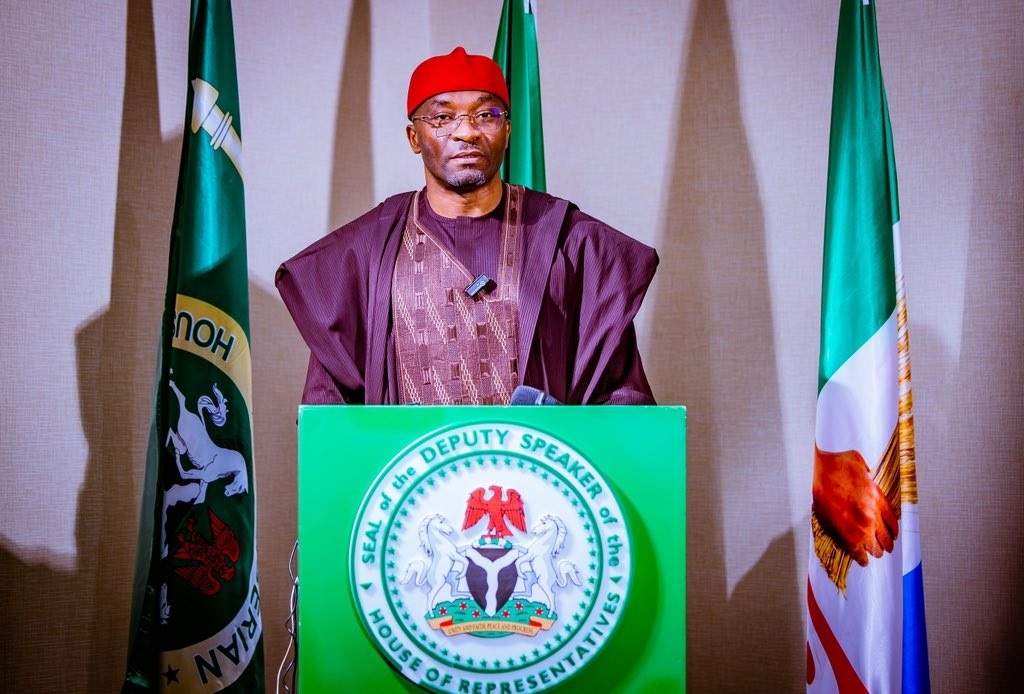

The Deputy Speaker of the House of Representatives, Benjamin Kalu, has called for coordinated and collective action among stakeholders to address Nigeria’s food security challenges and reposition the agriculture sector for sustainable growth.
Kalu spoke Thursday in Abuja while speaking at the Annual General Meeting of the All Farmers Association of Nigeria (AFAN).
He described agriculture as central to Nigeria’s economic future, stressing that the sector remains a critical driver of job creation, youth engagement and national stability.
According to him, every job created in agriculture translates into a household fed and a young person gainfully engaged, thereby reducing rural-urban migration and social instability.
The Deputy Speaker urged farmers to organise themselves, embrace technology and improve productivity, noting that farmers were not seeking charity but creating wealth and feeding the nation.
He also called on AFAN leadership to establish a formal and sustained dialogue with the government, identify priority constraints in the sector and develop comprehensive roadmaps for major commodities such as maize, rice, poultry and horticulture.
Kalu further advocated the creation of dedicated working groups to address key challenges in infrastructure, finance, technology and market access, urging the association to play a leading role in shaping Nigeria’s agricultural future.
Addressing state governments, the Deputy Speaker urged them to demonstrate a stronger commitment to agriculture by allocating at least five per cent of their budgets to agricultural infrastructure, adopting data-driven investment strategies and ensuring accountability for agricultural output and job creation.
He also challenged the private sector to increase investments in processing, logistics and market systems, while partnering with smallholder farmers to build resilient agricultural ecosystems capable of making Nigeria a regional agricultural powerhouse.
Kalu said Nigeria already possesses the resources, policy environment and partnerships required to transform the sector but lacks unified will among stakeholders.
He stressed that food security in Nigeria would not be achieved by the government alone but through collective action involving farmers, investors, traders and policymakers across the agricultural value chain.










Leave a Reply